Surfing in Lanzarote: The Complete Guide from First Wave to Reef Break
Lanzarote is not Bali. It's not Portugal. It's not the Gold Coast. And that's exactly why surfers keep coming back. The island sits in the path of every Atlantic swell that rolls south from the North Sea and every pulse that crosses from the west coast of Africa. The result: consistent waves, warm water year-round, and a coastline so varied that somewhere is always working, regardless of the swell direction, wind, or tide.
What makes Lanzarote different from most European surf destinations is the volcanic geography. The seabed here isn't sand shifting with every storm. It's lava rock, shaped by eruptions and carved by centuries of ocean. That means the breaks are permanent, predictable, and mapped with the kind of precision you only get when a wave has been breaking over the same reef for thousands of years. For surfers, that's gold. You can study a spot, learn its moods, and know exactly what it will do on a given swell and tide. No sandbars migrating overnight. No mystery peaks. Just volcanic reef doing what volcanic reef does.
This guide covers the surf on Lanzarote as it actually is: the breaks, the seasons, the levels, and the honest difference between what the surf schools sell and what the ocean delivers.
Why Lanzarote Works for Surfing
Three things set Lanzarote apart from other surf destinations in Europe.
Water temperature. It never drops below 17 degrees Celsius, even in February. In summer it reaches 22 or 23. A 3/2 wetsuit covers winter. In summer, boardshorts or a shorty will do. Compare that to the 12-degree water and 5/4 wetsuit requirement of northern Spain, Ireland, or the UK, and you understand why surfers from those countries treat Lanzarote as a winter escape where they can actually feel their fingers.
Swell consistency. The island picks up swell from the north, northwest, and west. North Atlantic storm systems from October to April send reliable groundswell that lights up the north and west coasts. In summer, the trade winds generate smaller, cleaner swells that keep the beginner-friendly spots fun and the sheltered reef breaks rideable. There are flat spells, but they rarely last more than a few days.
Variety. Within a thirty-minute drive, you can move from a gentle beach break rolling onto sand to a hollow reef break detonating over volcanic rock. Beginners have beaches where the waves are forgiving and the consequences of a wipeout amount to a mouthful of sand. Advanced surfers have reef breaks that demand respect and deliver the kind of waves that appear in magazines. That range, packed into an island you can cross in forty minutes, is rare anywhere in the world.
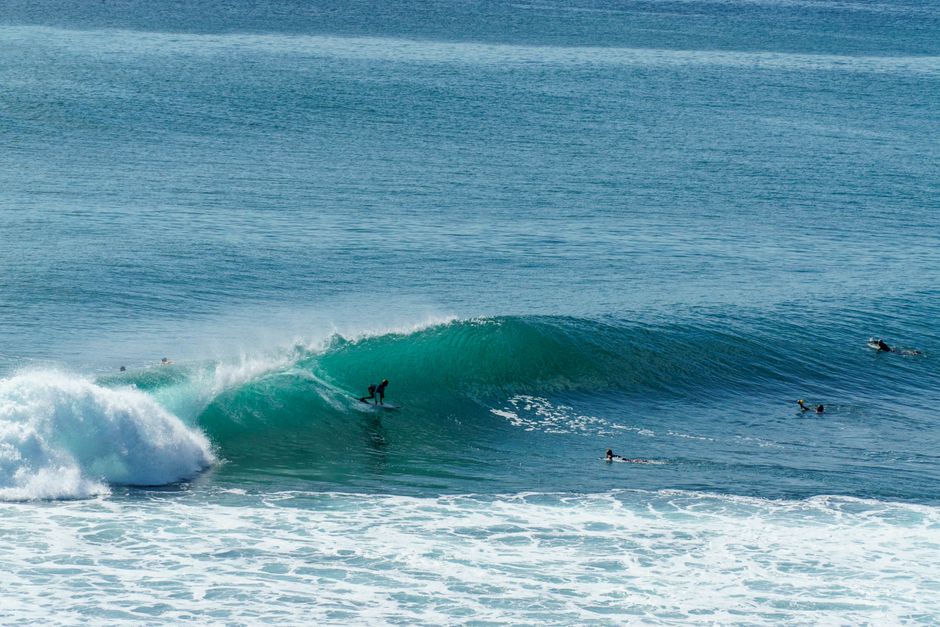
The Breaks: Where to Surf on Lanzarote
Lanzarote has dozens of surf spots. Some are well-known, busy, and documented in every surf guide ever written about the Canaries. Others are less obvious, tucked into stretches of coast that most visitors drive past without a second glance. Here are the ones that matter, organised by level.
Famara: The Centre of Everything
Famara is where Lanzarote surfing begins and, for many surfers, where it stays. A five-kilometre stretch of sandy beach backed by the Risco de Famara cliffs, which rise 600 metres straight up from the shore. The setting is dramatic. The waves are consistent. And the village of Caleta de Famara, once a quiet fishing hamlet, has become the island's surf hub: schools, board rentals, cafes where every second person has salt in their hair and sand between their toes.
The beach itself offers multiple peaks along its length. The sandbars shift with the seasons, but you'll almost always find a wave somewhere along the stretch. At low tide, the beach is enormous and the waves break far out, making for long paddles but clean, well-formed faces. At high tide, the waves break closer to shore, steeper and more powerful.
Best for: Beginners to intermediate surfers. The sand bottom is forgiving, the waves are rarely dangerous, and if you fall, you land on sand, not reef. Every surf school on the island uses Famara as its primary teaching beach.
Watch out for: The currents. Famara faces the open Atlantic and the rip currents here can be serious, especially on bigger days and around the rocky points at either end of the beach. Respect the flags, surf between them, and if you're new, don't paddle out alone.
Local knowledge: The left-hand point break at the southern end of Famara, called La Caleta, works on bigger swells and produces long, walling lefts that are a step up from the beach break. It's where the better surfers gravitate when the swell picks up. If you're intermediate and looking to push yourself, this is the progression from the main beach peaks.
San Juan (The Left and The Right)
North of Famara, past the village and around the headland, San Juan is a pair of reef breaks that work on medium to large northwest swells. The left is the more consistent of the two: a fast, hollow wave that breaks over a shallow volcanic reef and offers barrel sections on the right swell. The right is shorter but punchy, with a steep takeoff and a wall that lets you generate speed.
Best for: Intermediate to advanced surfers. The reef is shallow, the takeoffs are critical, and a wrong move puts you on volcanic rock. This is not a learning spot.
When it works: Medium to large northwest swell (1.5 to 3 metres), mid to high tide (the reef is too exposed at low). Light easterly or no wind.
La Santa
The village of La Santa, on the northwest coast, sits in front of one of Lanzarote's most powerful waves. La Santa Right is a heavy, fast, barrelling right-hander that breaks over a volcanic reef shelf. On a solid north swell, this wave is world-class. It's also dangerous. The reef is sharp, the impact zone is unforgiving, and the paddle-out through the channel requires timing and confidence.
La Santa Left, on the other side of the bay, is less intense but still a quality wave: a long, workable left that allows more manoeuvring and suits surfers who want power without the full commitment of the right.
Best for: Advanced surfers only (the right). Intermediate to advanced (the left). If you're unsure whether you're ready for La Santa Right, you're not ready.
Local etiquette: La Santa has a tight-knit local crew who surf it regularly and know every section of the reef. Respect the lineup. Don't paddle for everything. Wait your turn. The locals here are generally welcoming to surfers who show respect and read the conditions honestly.
El Quemao
If La Santa is powerful, El Quemao is its heavier sibling. Located just around the corner, El Quemao is a left-hand barrel that breaks over an extremely shallow reef. On its day, it produces some of the heaviest waves in the Canary Islands. A professional contest, the Quemao Class, runs here when conditions align, and the footage from those events shows why: thick, grinding tubes that throw over a reef you can almost touch from inside the barrel.
Best for: Expert surfers only. This is not a wave to experiment on. The consequence of a bad wipeout here is a trip to the hospital, not a bruised ego.
Orzola and the North Coast
The fishing village of Orzola, at the northern tip of the island, has several breaks that work on large swells and are far less crowded than the northwest coast spots. The waves here are exposed to raw Atlantic power with less protection from the headlands. When a big north swell hits, the breaks around Orzola light up with waves that few tourists — and not even all locals — ever see.
Best for: Intermediate to advanced surfers looking for less crowded alternatives. Getting here requires knowing what you're looking for. These aren't signposted surf spots.
The East Coast: Arrieta and Beyond
The east coast catches less swell than the north and west, but when a northeast or east swell runs (more common in winter), spots around Arrieta and the eastern shoreline come alive. The waves here tend to be smaller and less powerful, making them a good option for intermediates when the west coast is too big or too messy.
Best for: Intermediate surfers on days when the main spots are blown out or too large. A useful backup that most visitors don't consider.
The South Coast
The south coast around Playa Blanca and the Papagayo area is not a surf destination. The coastline is sheltered from the dominant north and northwest swells. Occasionally, a south or southwest swell will produce small, fun waves along the southern beaches, but these events are rare and unpredictable. If you're staying in the south and want to surf, you're driving to Famara. Budget thirty to forty minutes each way.
Surf Seasons: When to Come
Lanzarote has waves year-round, but what you'll find changes dramatically with the season.
October to March: The Main Season
This is when the North Atlantic sends its best. Low-pressure systems tracking across the ocean generate groundswells that travel thousands of miles before hitting Lanzarote's coast. The waves are bigger, more powerful, and more consistent than any other time of year. The reef breaks come alive. Famara can go from fun waist-high peaks to solid overhead waves in a matter of hours as a new swell arrives.
Average wave size: Chest-high to well overhead, with regular swells pushing double overhead on the exposed breaks.
Water temperature: 17 to 19 degrees. A 3/2 wetsuit for most; a 4/3 if you feel the cold.
Crowds: This is peak surf season, so expect company at the well-known spots. Famara's beach break absorbs the numbers thanks to its length. The reef breaks have smaller lineups but tighter locals.
Who it suits: Intermediate to advanced surfers who want proper Atlantic surf. Beginners can still learn at Famara, but the conditions are more challenging and the currents stronger.
April to June: The Sweet Spot
The big winter swells taper off, but Lanzarote still picks up enough energy to keep the main spots working. The waves are smaller and cleaner. The wind drops. The water warms up. And the crowds thin out as the European surf tourists head home or further north for their own summer seasons.

Average wave size: Waist to head-high, with occasional larger pulses from late-season storms.
Water temperature: 19 to 21 degrees. A 3/2 or a springsuit.
Who it suits: Everyone. This is arguably the best time to visit Lanzarote for surfing if you want good waves, warm water, manageable conditions, and space in the lineup.
July to September: Summer Mode
The Atlantic calms down. Swells become less frequent and smaller. The trade winds blow consistently from the northeast, which is onshore for most of the north coast spots, making conditions messy by midday. But mornings, before the wind fills in, can be clean and fun. Famara still produces waves most days, just smaller and gentler.
Average wave size: Knee to waist-high, occasionally chest-high on a good pulse.
Water temperature: 21 to 23 degrees. Boardshorts weather.
Who it suits: Beginners and intermediate surfers who want warm, mellow conditions. Advanced surfers may get frustrated by the lack of size, but early mornings can still deliver clean, playful waves worth paddling out for.
Surf Schools and Lessons
Lanzarote has no shortage of surf schools. Caleta de Famara alone has a dozen or more, ranging from one-man operations run by local surfers to established schools with multiple instructors, equipment fleets, and slick marketing. The quality varies as much as you'd expect.
What a Good Surf School Looks Like
Small groups. Eight students per instructor is the maximum for meaningful coaching. Anything above that and you're sharing a wave with too many people and receiving too little attention. The best schools cap at four to six.
Qualified instructors with local knowledge. A surf coaching qualification is the minimum. What matters more is how well the instructor knows Famara's sandbars, currents, and moods on any given day. The best instructors adjust the session location based on what the beach is doing that morning, not what worked last week.
Proper equipment. Large, soft-top boards for beginners (not beaten-up shortboards). Wetsuits that fit and aren't held together by hope. Leashes that aren't frayed. This stuff matters for safety and for learning.
Honest assessment. A good school will tell you if conditions aren't suitable for your level rather than sending you out anyway to justify the booking. If the school runs lessons regardless of conditions, it prioritises revenue over safety.
Typical Costs
Group lesson (2 hours): 35 to 50 euros per person
Semi-private lesson (2 to 3 students): 60 to 80 euros per person
Private lesson (1-on-1): 80 to 120 euros
Multi-day packages (3 to 5 days): 100 to 200 euros, often including board rental between lessons
Surf camp (accommodation + daily lessons + equipment): 400 to 700 euros per week
Surf Camps
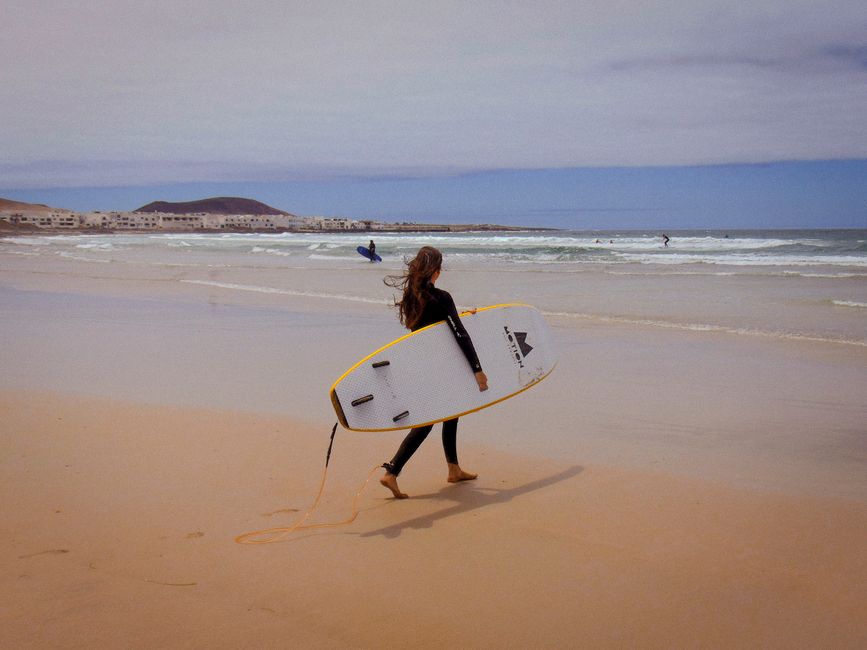
Famara has become a hub for surf camps that combine accommodation, daily lessons, yoga, and the general atmosphere of a community built around waves. These range from basic hostels with shared rooms and communal kitchens to more polished setups with private rooms, daily surf coaching, video analysis, and excursions around the island on flat days.
For solo travellers or anyone wanting to immerse in surf culture for a week, a camp is a good option. You'll surf with the same group each day, progress faster with consistent coaching, and have a ready-made social life in a village where everyone is there for the same reason.
For couples, families, or anyone who wants surfing as part of a broader Lanzarote trip rather than the entire focus, individual lessons booked day by day offer more flexibility.
Board Rental and Equipment
If you're bringing your own board, Lanzarote is straightforward. The airport handles board bags routinely (this is a surf island, after all), and the drive from the airport to Famara is about twenty-five minutes. Most accommodation in Caleta de Famara has space for board storage.
If you're renting, every surf shop in Famara offers boards by the day or week. Expect to pay 15 to 25 euros per day for a quality board, less for weekly rates. The selection typically covers soft-tops for beginners, longboards, funboards (mid-lengths), and shortboards. Some shops carry fish and hybrid shapes that suit Lanzarote's average wave size better than a standard shortboard.
Tip: If you're an intermediate surfer visiting in summer, bring or rent something with more volume than your usual board. Lanzarote's summer waves reward paddling power and glide over high-performance turning. A fish or a mid-length will give you twice the wave count of a shortboard on the smaller days.
Beyond the Waves: The Famara Life
Part of what makes surfing in Lanzarote special has nothing to do with the waves themselves. Caleta de Famara is a village that runs on surf culture without feeling manufactured. The cafes serve good coffee and fresh food. The sunsets behind La Graciosa turn the sky colours that would look fake in a photograph. The cliffs behind the village change shade through the day as the light moves across them. And on flat days, the island offers enough to fill a week without touching a surfboard.
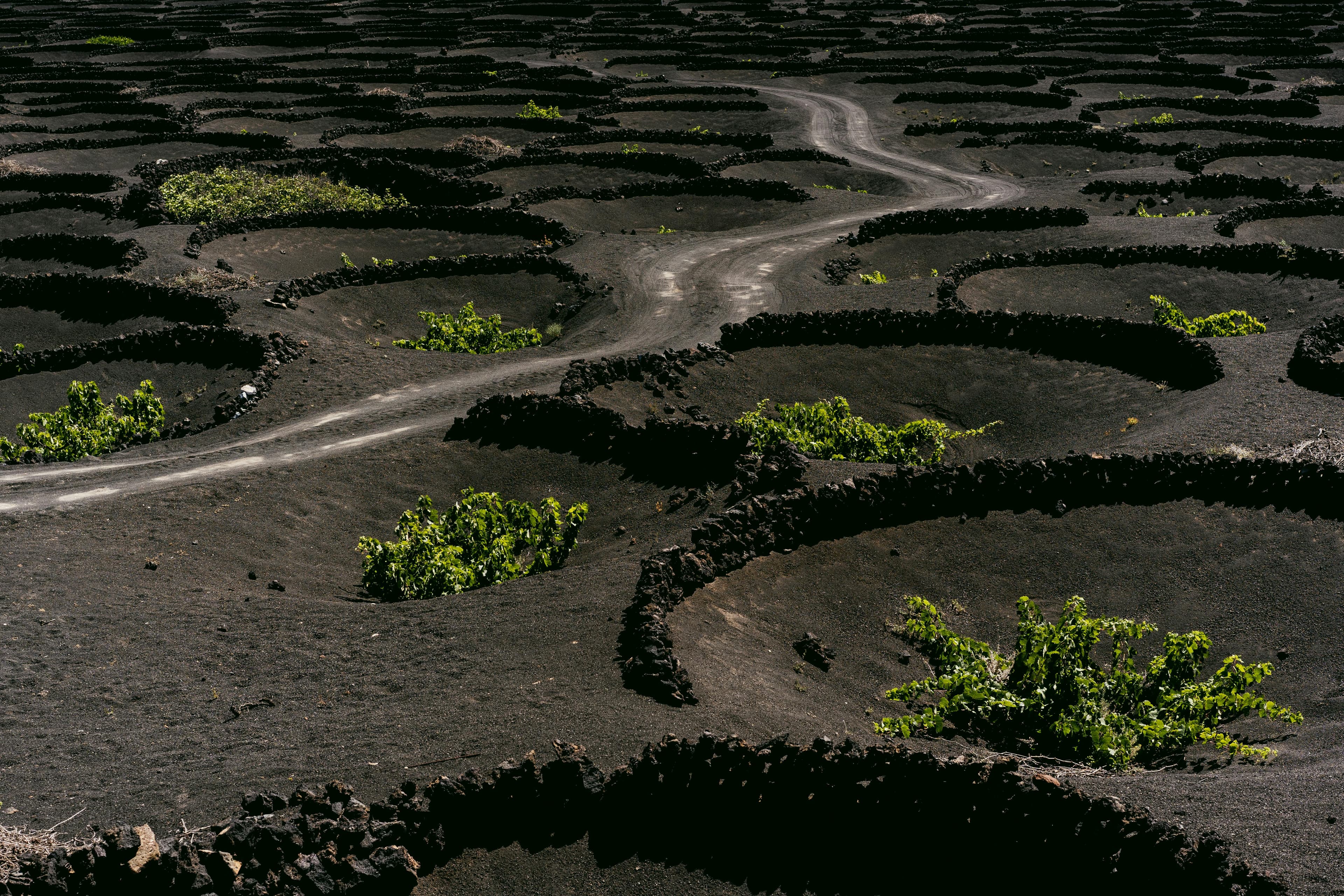
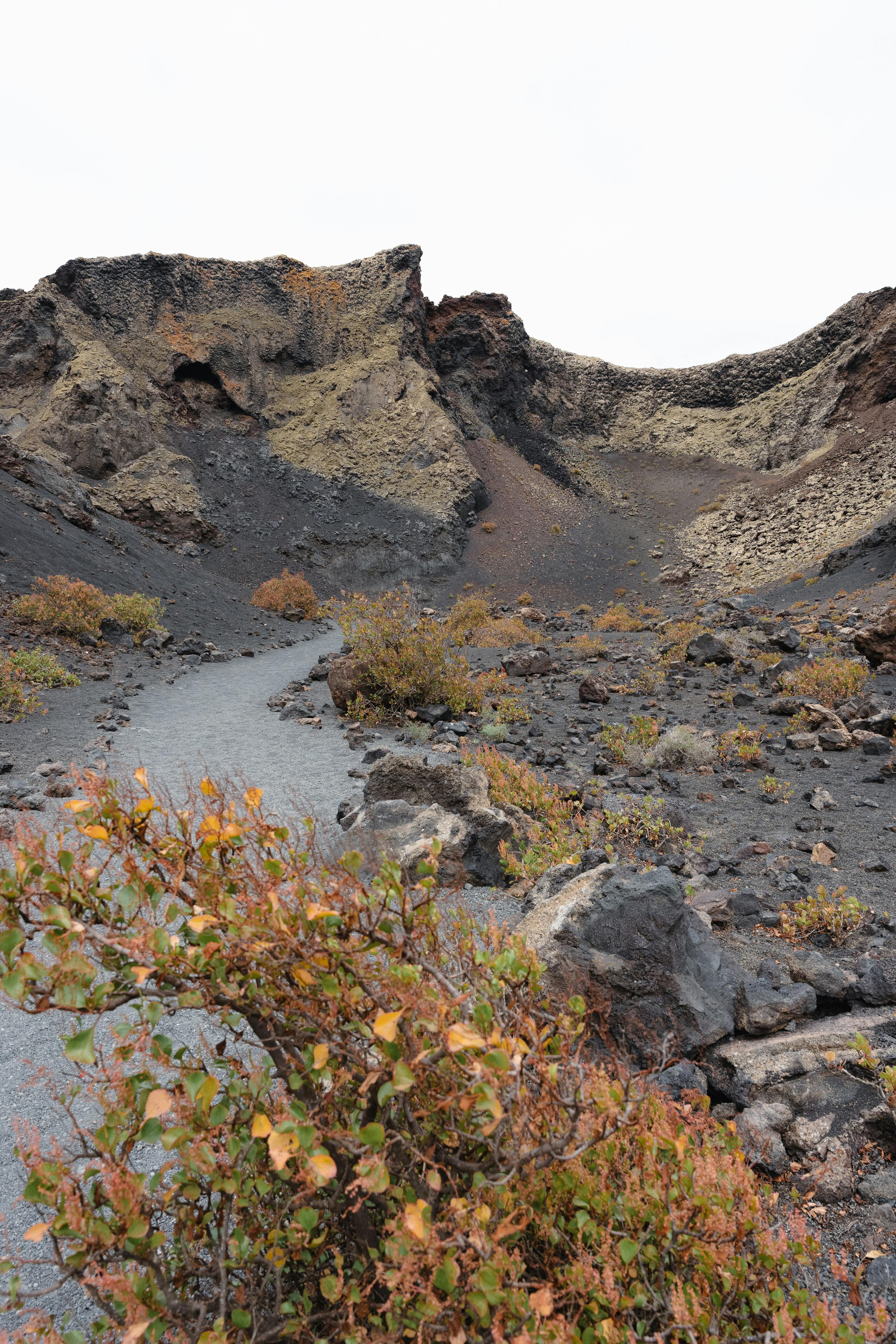
The volcanic landscape is less than thirty minutes from Famara. The hidden corners of the island are best explored on the days the ocean goes quiet. Wine tasting in the volcanic bodegas of La Geria, hiking the caldera trails, or simply driving the coast road with no destination in mind: Lanzarote rewards the surfer who stays curious on rest days.
This is not an island where you sit in your accommodation waiting for the swell forecast to change. It's an island where the days without waves are nearly as good as the days with them.
Practical Information
Getting to the Surf
Lanzarote's airport (Arrecife, ACE) receives direct flights from most major European cities. Budget airlines serve it year-round, with more routes in winter (conveniently aligning with peak surf season). From the airport to Famara is a twenty-five-minute drive. A rental car is essential if you want to explore different breaks. Public transport to Famara exists but is infrequent and impractical with surf equipment.
Where to Stay
Caleta de Famara: The obvious choice for surfers. Walk to the beach, walk to the surf shops, walk to breakfast. Accommodation ranges from budget apartments and surf camp hostels to comfortable holiday rentals. The village is small, quiet at night, and entirely oriented around the beach and the cliffs.
Teguise: The old capital, ten minutes inland from Famara. More restaurants, more architecture, a famous Sunday market. A good base if you want a bit more going on in the evenings while still being close to the surf.
Puerto del Carmen or Costa Teguise: The main tourist resorts. Further from Famara (twenty to thirty minutes) but closer to other activities, restaurants, and nightlife. A reasonable base if surfing is one part of a mixed holiday.
Hazards and Safety
Currents. Famara's rip currents are the most common hazard for visiting surfers. They run along the beach and out through channels between the sandbars. If you feel yourself being pulled, don't fight it. Swim parallel to the beach until you're clear, then catch the whitewater back in. If in doubt, raise an arm.
Reef. Any break outside Famara's sandy beach involves volcanic reef. It's sharp, uneven, and will cut you open if you fall on it. Reef boots are worth considering for shallow reef breaks. Know the depth before you paddle out and always protect your head during wipeouts.
Localismo. Lanzarote's surf community is generally friendly, but the better reef breaks have regular locals who've earned their priority through years of surfing the spot. Show respect. Don't drop in. Don't paddle straight to the peak on your first wave. Sit on the shoulder, watch, learn the lineup, and work your way in. You'll get waves.
Sun. The Canary Islands UV index is high year-round, and the reflection off the water amplifies it. Zinc on your face, rash vest if you're surfing without a wetsuit, and sunscreen on the backs of your hands, calves, and feet. Surf ears are worth bringing too: the trade winds here contribute to surfer's ear over time.
Frequently Asked Questions
Can I learn to surf in Lanzarote?
Yes. Famara is one of the best learning beaches in Europe. The sandy bottom, consistent small waves, and concentration of quality surf schools make it ideal for beginners. Most people stand up and ride whitewater in their first lesson. Riding open (unbroken) waves typically takes three to five days of consistent practice. The warm water and relaxed atmosphere make the learning process far more enjoyable than shivering through lessons in northern Europe.
What's the best time of year for beginner surfers?
April to June and September to October. The waves are manageable, the water is warm, and the crowds are thinner. Summer (July and August) works too, though the afternoon trade winds can make conditions choppy. Winter has bigger, more powerful waves that are exciting to watch but can be intimidating and less suitable for learning.
Do I need a wetsuit?
In winter (November to March), yes. A 3/2mm fullsuit is standard. In summer, you can surf in boardshorts or a bikini, though many people wear at least a rash vest or shorty for sun protection and the occasional cooler morning. Surf schools and rental shops all provide wetsuits.
Is it crowded?
Famara can get busy, especially in the peak surf months (October to February) and during school holidays. However, the beach is five kilometres long, so the crowd spreads out. If the main peaks in front of the village are too busy, walk ten minutes in either direction and you'll find space. The reef breaks are less crowded by nature, as they require more skill and knowledge to surf safely.
Can I surf if I'm staying in Playa Blanca or Puerto del Carmen?
You can, but you'll need to drive to Famara or the northwest coast. From Puerto del Carmen, it's about twenty-five minutes. From Playa Blanca, closer to forty. There's no meaningful surf in the south of the island. Factor in the drive time when deciding where to stay if surfing is a priority.
Is Lanzarote good for experienced surfers?
Very. The reef breaks on the northwest coast (La Santa, El Quemao, San Juan) produce high-quality waves that challenge competent surfers. In winter, the swell size and consistency rival anywhere in mainland Europe, with the bonus of warmer water and volcanic backdrops that nowhere on the continent can match. Experienced surfers who explore beyond the obvious spots will find less-known setups along the coast that reward local knowledge and a willingness to walk.
Can I combine surfing with other Lanzarote experiences?
Absolutely, and you should. Lanzarote is a small island packed with things to do beyond the surf. A boat trip along the volcanic coast shows you the cliffs you've been surfing beneath from a completely different angle. The wine region of La Geria, the volcanic landscapes of Timanfaya, the hidden gems scattered across the island: all of it sits within half an hour of Famara. The best Lanzarote surf trips are the ones that treat flat days as opportunities, not problems.
Planning a trip to Lanzarote that combines surfing with the island's best experiences? We arrange private excursions, volcanic tours, wine tastings, and coastal adventures that fill the days between swells. Get in touch to build a trip that covers the waves and everything beyond them. Or browse our curated experiences for inspiration.