15 Lanzarote Must-Dos That Only Locals Know About
When you search "things to do in Lanzarote," you usually come across the same five suggestions: Timanfaya, Jameos del Agua, Mirador del Río, a camel ride, and a beach in Puerto del Carmen. These are great, but it's what everyone does, in the same order, on the same bus.
But the locals have a different side of Lanzarote to show you. It's a side that doesn’t appear on organised tours or booking sites. Picture quiet bodegas where a third-generation winemaker pours you something that never leaves the island. Volcanic coastlines where you won't see another soul all morning. Fishermen in Órzola cooking their dawn catch for you, if you know who to ask. This guide brings those places and experiences together. What locals actually recommend, not the recycled lists from someone who spent a long weekend here. Some of these spots are hidden. Others are hiding in plain sight. All of them will change the way you see this island.
Secret Wine Experiences: The Bodegas Nobody Talks About
Wine tours in Lanzarote often take you to the same three stops: Bodega El Grifo, Bodega La Geria, and Bodega Rubicón. Slick operations built for tourist coaches looking for a quick tasting. You'll try a decent Malvasía, buy a bottle from the shop, and move on.
But those bodegas are only a small part of what exists in La Geria.
The Family Bodegas of La Geria
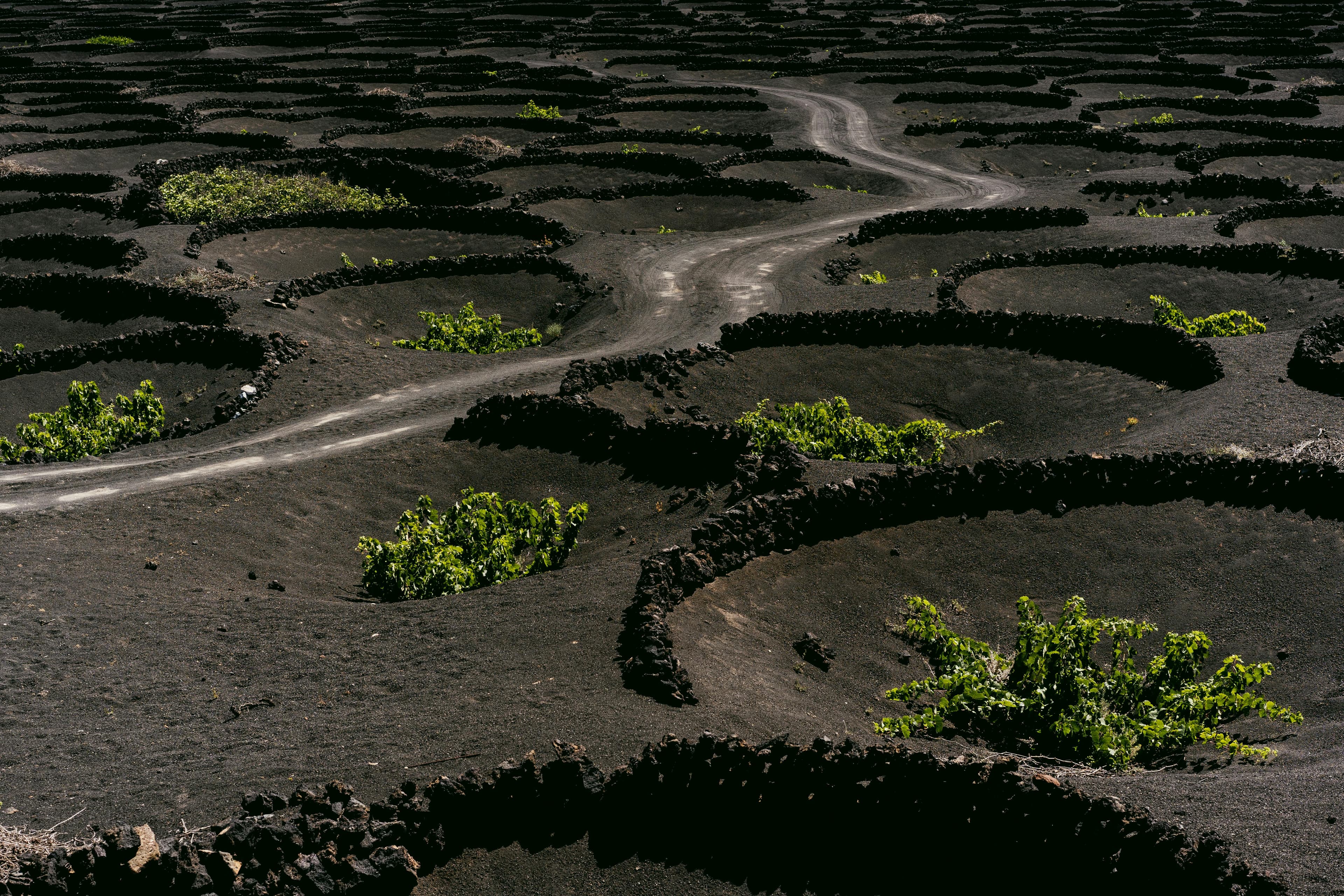
In the volcanic valley between Uga and Teguise, dozens of family-run bodegas produce wine in tiny quantities — too little for export. Sometimes just a few hundred bottles a year. These aren't conventional businesses. They're families continuing what their grandparents started: growing the Malvasía Volcánica grape in hand-dug zocos — those crescent-shaped walls of volcanic rock that shield each vine from the wind.
The wine from these small producers tastes different from what the commercial bodegas offer. It has a minerality that comes from the volcanic soil — the picón, a porous lapilli that absorbs moisture from the night air and feeds it back to the roots. A bodega near Masdache makes a dry Malvasía with a faint smokiness you won't find in any restaurant or shop. The family drinks most of it themselves.
Local tip: These bodegas don't advertise. No roadside signs, no website, no TripAdvisor page. You find them through local word of mouth or through someone who knows the families personally.
What Makes Lanzarote Wine Unique
Lanzarote's cultivation method is recognised by UNESCO as a cultural landscape. Each vine sits in its own crater, sheltered by its own semi-circular wall, forming what looks from above like a lunar surface dotted with green. The system was born out of necessity: after the eruptions of 1730 buried farmland under metres of ash, farmers discovered that the layer of picón worked as a natural mulch. The tradition hasn't changed since.
The result is a wine with real terroir. Volcanic, mineral, unlike anything you'll find on mainland Spain. The best of it never leaves the island.
Discover our private wine and gastronomy experiences
Secret Natural Spots That Most Visitors Miss
Lanzarote is a UNESCO Global Geopark, and the standard tours cover Timanfaya and its famous fire demonstrations. Worth seeing. But the island's most striking landscapes are often the ones with no ticket booth and no car park.
Charco de los Clicos: The Green Lagoon at Its Best
Most visitors see Charco de los Clicos from the viewpoint above — a quick photo stop on a southern Lanzarote tour. The green lagoon inside a volcanic crater, set against a black sand beach and rust-coloured cliffs, is arguably one of the most unique landscapes in the Canary Islands.
What almost nobody knows: the beach below, Playa del Paso, is accessible on foot and almost always deserted. The green colour comes from Ruppia maritima, an algae that thrives in the warm, mineral-rich water. In the late afternoon, when the sun drops behind the crater rim, the colour shifts from emerald to something closer to jade. It's an entirely different place from the photo taken at the viewpoint.
Best time: Late afternoon, around 4–5 pm. The light is better and the tour buses are gone.
The Coves Beyond Papagayo
Everyone knows Playa de Papagayo. It still ranks among the most beautiful beaches in Lanzarote, and rightly so. But it's also the most accessible in the Los Ajaches natural monument, which means by midday it's packed.
Walk fifteen minutes along the coastal trail and you'll find a string of smaller coves that most visitors never reach. Playa de la Cera and Playa del Pozo are sheltered, south-facing, and on most days you'll share them with a handful of people at most. The water is calm, the snorkelling along the rocky edges is excellent, and there are no beach bars, no sun loungers for hire, no noise. Just volcanic rock meeting turquoise water.
How to get there: From the Papagayo car park, follow the coastal path east. Wear shoes with grip — the volcanic rock is sharp.

Salinas de Janubio at Sunset
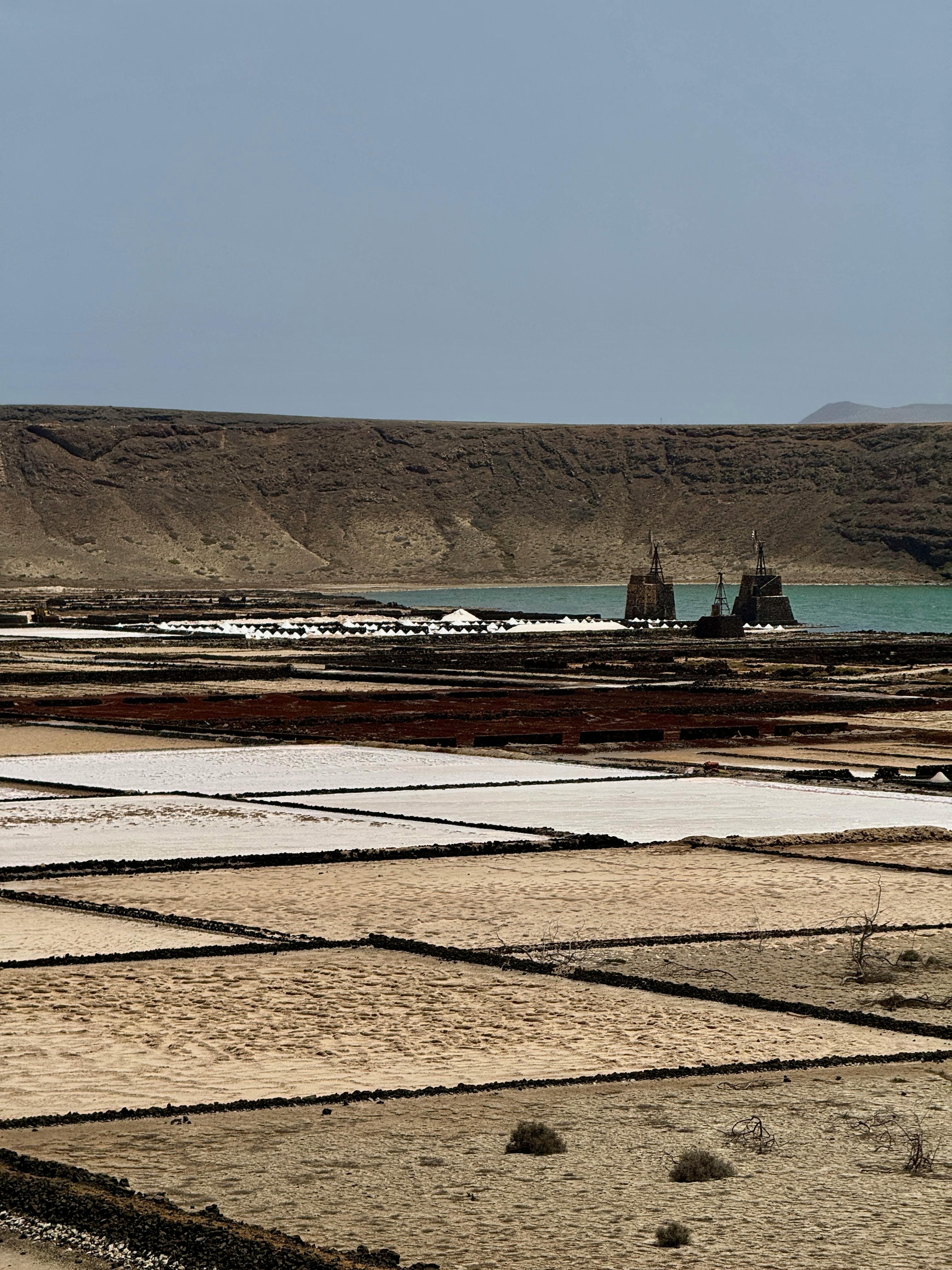
The Salinas de Janubio are one of the most photographed spots on Lanzarote, but almost exclusively from the roadside viewpoint. Very few visitors actually go down to the salt pans themselves.
At sunset, the geometric grid of evaporation pools turns into a patchwork of pink, white, and amber. The colours come from varying salt concentrations and halophilic bacteria that thrive in the hypersaline water. A path runs along the pans where workers still harvest fleur de sel by hand with wooden rakes, exactly the way it's been done here since the 1890s.
Local tip: Visit between May and October, when the salt harvest is active. You can sometimes buy bags of fleur de sel directly from the workers.
Volcanic Tubes Off the Tourist Circuit
Cueva de los Verdes and Jameos del Agua are the lava tubes everyone visits — iconic César Manrique sites, undeniably impressive. But Lanzarote sits on a network of lava tunnels that extends far beyond those two.
The Tunnel of Atlantis, partially submerged and stretching under the sea, is one of the longest volcanic tubes in the world. You can't explore it in full, but certain accessible sections receive almost no visitors. The silence underground, broken only by the occasional drip of mineral water, is something a crowded tour of Cueva de los Verdes simply can't offer.
Explore our volcano and nature experiences
Hiking in Lanzarote: The Trails the Guidebooks Forget
Search "hiking in Lanzarote" and you'll find the usual suspects: the Timanfaya loop, the Caldera Blanca climb, maybe the Papagayo coastal path. Good walks, all of them. But the island has far more interesting routes for those willing to go off the marked trails.
The Risco de Famara From Above
The Famara cliff, towering nearly 600 metres above the north-west coast, is visible from almost everywhere. Few people know you can walk along the top of it, on a trail that offers sheer views down to La Graciosa and the Chinijo archipelago. In the morning, before the clouds cling to the summit, visibility stretches to the islands on the horizon. The path isn't officially waymarked along its full length, and some stretches run close to the edge. This isn't a hike for everyone, but for those comfortable with heights, it's probably the finest walk in the Canary Islands.
Practical info: Start from Ye or Guinate, early morning. Allow 3 to 4 hours. Bring water and proper hiking shoes. The wind can be fierce.
Caldera Blanca at Sunrise
Caldera Blanca is one of the most accessible volcanoes on the island, and the trail circling it features in every guidebook. The problem is that everyone goes mid-morning, when the sun is beating down and the car park is full.
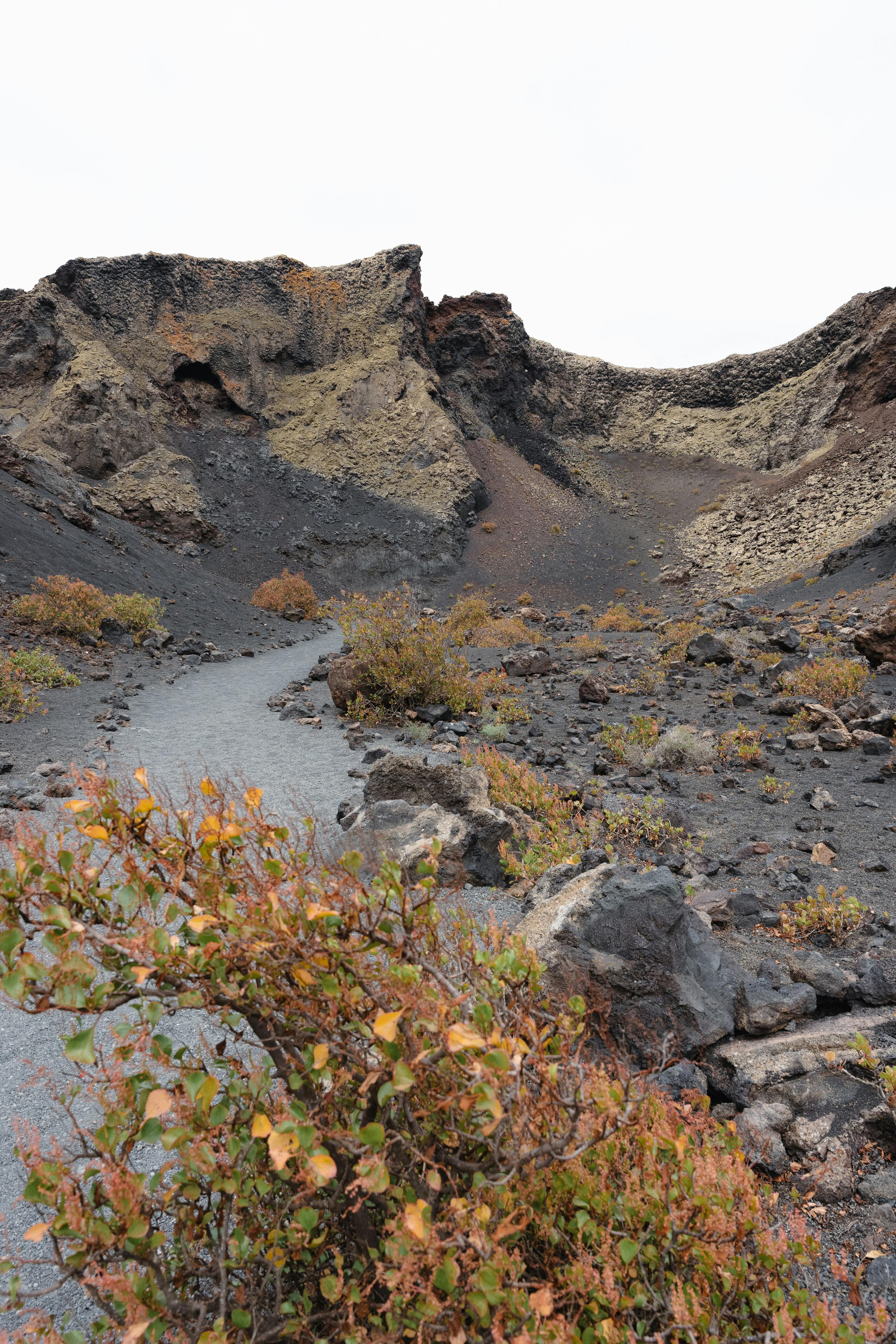
Go at dawn. The path across the Timanfaya lava field in the low-angled early morning light is an entirely different experience. Long shadows carve out the terrain, colours shift from deep black to ochre, and you'll be alone at the crater rim when the sun rises over the caldera. The silence is absolute.
Femés to Playa Quemada
This trail drops from the hilltop village of Femés in the south down to the coast, through a landscape of dry ravines and abandoned agricultural terraces. It's roughly a two-hour walk, almost entirely downhill, ending at the tiny fishing village of Playa Quemada. The arrival — after the dry, silent valleys — facing the ocean and a hamlet of some thirty houses, is genuinely striking.
Tip: Do the descent in the morning, have fresh fish for lunch in Playa Quemada, and arrange a car ride back. The climb up in the sun is brutal.
See our hiking and nature experiences
Authentic Local Cuisine: What Lanzaroteños Actually Eat
The resort restaurants in Puerto del Carmen and Costa Teguise serve a softened version of Canarian cooking aimed at tourists: passable paella, generic tapas, a plate of papas arrugadas for local colour. What the locals actually eat is different — simpler, more precise, and tied to specific villages and families.
Órzola: Eating with the Fishermen
Órzola is a small fishing village at the northern tip of Lanzarote, known mainly as the departure point for the ferry to La Graciosa. Most visitors pass straight through. That's a mistake.

The harbour restaurants serve fish that was in the water just hours earlier. Whole grilled vieja (parrotfish), served simply with mojo verde and wrinkled potatoes. Caldo de pescado — a broth with more flavour than most full meals. Portions are generous, prices are local, and nobody is performing for Instagram.
The real experience: Some fishermen in Órzola will take visitors out at dawn on their small boats, show them traditional line fishing, and cook the catch right at the harbour. It's not on any booking platform. Word of mouth only.
Best time: Weekday mornings. Get there early. The best fish goes first.
The Markets and the Food You Won't Find in Restaurants
The Teguise Sunday market is famous — perhaps too famous. It's become more of a tourist attraction than a genuine local market. For authentic local produce, try the Haría Saturday market instead. Smaller, quieter, focused on what people in the northern villages grow and make: goat's cheese from small herds, mojos made with local chilli peppers, prickly pear jams, and honey from bees that feed on wild volcanic flowers.
The goat's cheese is worth seeking out specifically. Queso de cabra from Lanzarote ranges from fresh and mild to aged and powerful, sometimes rubbed with gofio (toasted grain flour) or pimentón. Some of the best comes from farms around Haría and Femés that don't distribute beyond the island.
Cooking in a Local Family Home
This is one of those experiences that simply doesn't exist as a commercial product. Certain families on the island, mainly in the farming villages around Teguise and San Bartolomé, welcome small groups to cook in their own kitchens. You'll make papas arrugadas properly — boiled in seawater until the salt forms a white crust — pound mojo in a stone mortar, and learn the exact ratio of garlic, cumin, and coriander that every family argues about.
It's not advertised anywhere. It happens because someone knows someone.
Sea and Diving: Secrets Beneath the Surface
Lanzarote is surrounded by some of the clearest water in the Atlantic, with comfortable temperatures year-round thanks to the Canary Current. The commercial water activities in Lanzarote — catamaran trips, jet skis, banana boats — do what they do. But the sea around this island rewards those who take their time and go deeper.
Secret Snorkelling Spots
The popular spot at Playa Chica in Puerto del Carmen is well known and well frequented. For something quieter, head to the eastern end of Punta de Papagayo, where volcanic rock formations create natural pools teeming with damselfish, viejas, and — if you're patient — the occasional angel shark resting on the sandy bottom.
Another spot the diving community in Lanzarote knows well: the rocky coast near Charco del Palo on the east side. The seabed here is made up of volcanic plateaus and rock passages, with visibility that regularly exceeds 25 metres. It's not a designated marine reserve, so you won't find it on official maps, but local divers consider it one of the best sites on the island.
Fishing with Local Fishermen
Commercial fishing trips in Lanzarote usually mean a large boat, rods set up for you, and a fairly generic deep-sea outing. The experience with a local fisherman from Órzola, La Santa, or Puerto Calero is different in every way.
You'll use hand lines and traditional fish traps. You'll learn to read the currents the way someone whose family has fished these waters for generations does. The boats are small, nothing is rushed, and whatever you catch, you eat — cooked most of the time right at the harbour by the fisherman's family.
This kind of experience isn't sold on any booking platform. It exists in the space between tourism and daily life.
Sunrise Kayaking at Famara
Famara beach is famous for surfing — the long left-hand breaks rolling along the cliff-backed coast draw surfers from across Europe. But at dawn, before the wind picks up and the swell builds, the waters off Famara go flat.
Paddling a kayak along the Famara cliff at sunrise, with La Graciosa and the Chinijo archipelago ahead of you and the Risco de Famara rising to your right, is one of the most powerful and most silent experiences on the island. The cliffs shift colour as the sun rises — from charcoal grey to dark amber, then to pale gold. There's nobody around. Just the sound of your paddle and the occasional flying fish breaking the surface.
Practical note: Only attempt this in calm conditions. The Famara coast is exposed and currents can be strong. Early summer mornings offer the best window.
See our sea and adventure experiences
Art and Culture Off the Tourist Circuit

César Manrique is unavoidable in Lanzarote, and rightly so. His influence shaped the island's architecture, its relationship with tourism, and its identity. But the standard Manrique circuit — Jameos del Agua, Mirador del Río, Fundación César Manrique — only scratches the surface.
Manrique's Lesser-Known Works
The Monumento al Campesino in San Bartolomé sees far fewer visitors than the major attractions. Yet it's one of Manrique's most powerful works: a 15-metre sculpture made from fishing boat tanks and water drums, dedicated to the island's peasant farmers. The adjoining Casa Museo del Campesino, a reconstructed traditional farmhouse, is often empty mid-morning. It's a better way to understand Lanzarote's agricultural history than anything you'll find in a resort lobby.
Manrique's first home in Tahíche — now the Fundación — is heavily visited, but his last residence in Haría, surrounded by palm trees in the Valley of a Thousand Palms, is far quieter. The house is preserved just as he left it: unfinished canvases on easels, a notebook open on the desk. It feels less like a museum and more like someone's home — as if the owner stepped out for coffee and never came back.
Artisan Workshops and Local Galleries
Beyond Manrique's monuments, Lanzarote has a small but active community of artists and craftspeople. In Teguise, several workshops produce ceramics from local volcanic clay — the dark, iron-rich material gives the pieces a weight and colour that have nothing in common with the mass-produced souvenirs in tourist shops.
The village of Haría has quietly become a hub for independent artists. Small galleries along its main street showcase the work of painters, sculptors, and photographers who live and work on the island. None of this appears in the standard Lanzarote activity lists, but an afternoon wandering the galleries and studios of Haría, with a coffee on the main square under the laurel trees, is one of the best things to do in Lanzarote if art interests you beyond the postcard.
How to Experience the Real Lanzarote
The truth about Lanzarote's secrets is that the best ones aren't places you can pin on Google Maps. They're experiences that depend on people. The fisherman who takes you out at dawn. The winemaker who opens her bodega on a Tuesday afternoon. The farmer in Haría who makes the island's best goat's cheese but has never heard of TripAdvisor.
These experiences exist in a space that mass tourism can't reach. Not because they're exclusive in the red-carpet sense, but because they're personal. They come from relationships, introductions, and trust built over years.
That's exactly what we do at Lanzarote Untold. We've spent years building these connections with winemakers, fishermen, artists, farmers, and families across the island. We arrange private, small-group experiences that connect you with the people and places that make Lanzarote what it truly is — beyond the hotel strip and the coach tour circuit.
No large groups. No generic itineraries. No experiences you could find on any platform. Just genuine access to an island most visitors will never truly know.
Explore our private and bespoke experiences
Frequently Asked Questions
What are the best off-the-beaten-path things to do in Lanzarote?
The best hidden gems in Lanzarote include the family-run bodegas of La Geria (non-commercial winemakers outside the tourist circuit), the eastern coves beyond Papagayo, the salt harvest at Salinas de Janubio, the fishing village of Órzola for authentic local food, and César Manrique's lesser-known residence in Haría. Most require local knowledge to access or fully appreciate.
What should I not miss in Lanzarote beyond the main attractions?
Don't miss a wine tasting at a family bodega in La Geria — the volcanic winemaking tradition is UNESCO-listed and unlike anything else in the world. The Haría Saturday market for cheese and local produce, sunrise kayaking off Famara beach, hiking along the Risco de Famara, and the Salinas de Janubio at sunset are all experiences most visitors miss but locals consider essential.
Is Lanzarote worth visiting?
Lanzarote is one of the most geologically and culturally unique islands in Europe. It's a UNESCO Global Geopark with a volcanic landscape shaped by 18th-century eruptions, a winemaking tradition that exists nowhere else on the planet, and an artistic heritage shaped by César Manrique that has influenced the island's entire architecture. For a trip focused on nature, gastronomy, wine, and authentic culture, Lanzarote offers something genuinely different from any other destination.
What is the typical food of Lanzarote?
Lanzarote is known for papas arrugadas (salt-crusted wrinkled potatoes) served with mojo rojo (red chilli sauce) and mojo verde (coriander and parsley sauce), fresh fish such as vieja (parrotfish) and cherne (wreckfish), artisan goat's cheese from local herds, and wines from the volcanic Malvasía grape. The island's cuisine is simple, ingredient-driven, and closely tied to its fishing and farming traditions. The best of it is found in village restaurants and private homes, not in resort dining rooms.